

How to Make Leather Shoes Shine Quickly
When leather shoes look dull before a meeting, event, retail display, or daily wear, you may not have time for a complete shoe-care routine. Fortunately, you can often restore a clean, polished appearance in just a few minutes with the right products and technique.
The fastest way to make leather shoes shine is to remove surface dust, apply a thin and even layer of suitable shoe polish, and buff the leather if the product requires it. For even faster maintenance, instant-shine products such as liquid shoe polish or shine sponges can reduce the number of steps.
For consumers, the best method depends on the leather condition and desired finish. For retailers, distributors, footwear brands, and private label shoe care buyers, understanding these differences is also important when selecting products for different customer groups.
What Is the Fastest Way to Shine Leather Shoes?
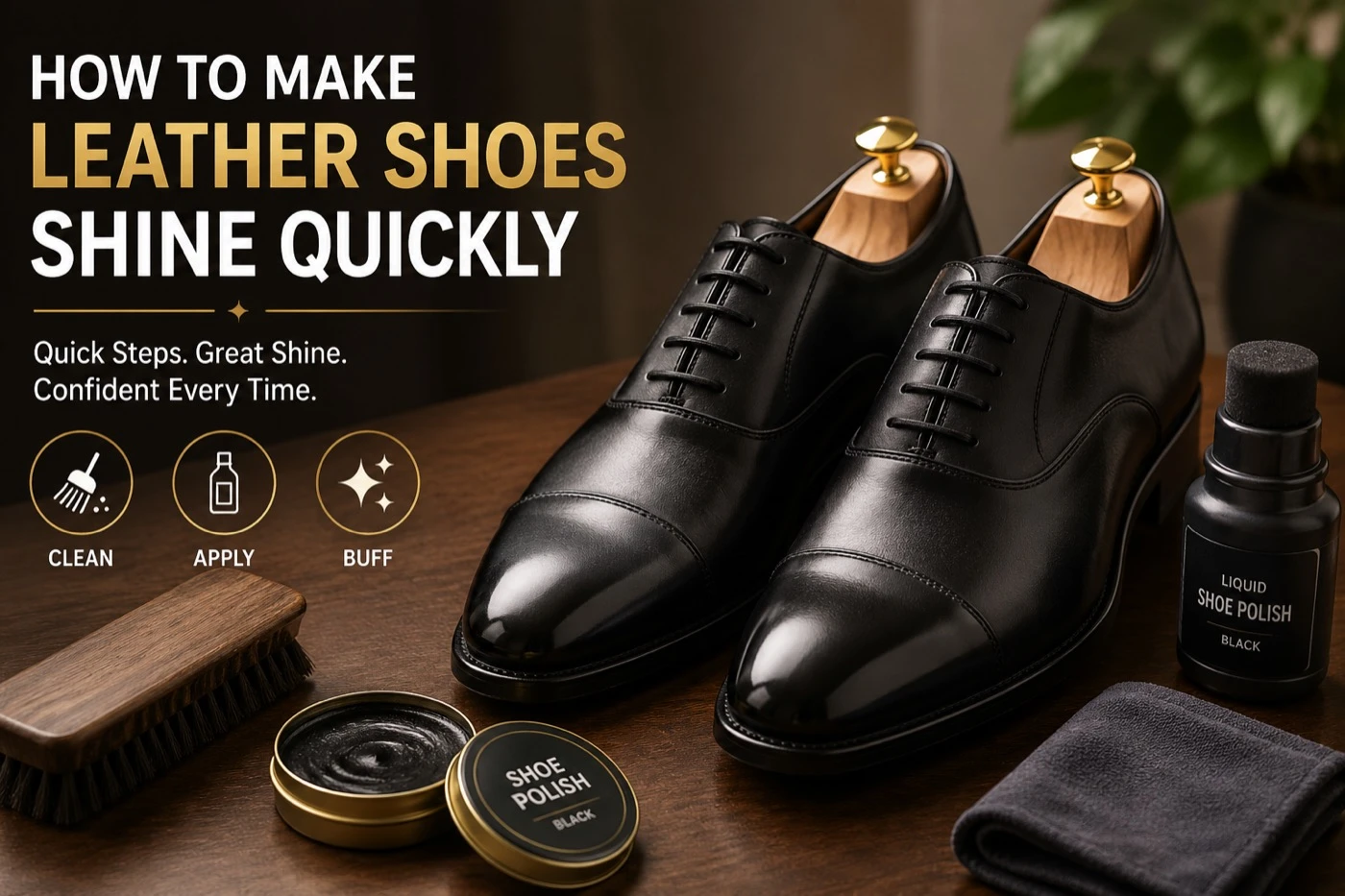
For smooth finished leather, a quick shoe-shine routine usually involves three basic steps:
- Remove loose dust and dirt.
- Apply a suitable leather shoe polish or instant-shine product.
- Allow the finish to settle and buff when necessary.
The key to speed is not applying more polish. A thin, controlled application is usually easier to distribute and less likely to leave an uneven finish.
If the shoes are only slightly dull, the process can be very quick. Shoes with heavy dirt, scratches, dryness, or significant color loss may need more complete cleaning and conditioning before polishing.
Step 1: Remove Dust and Surface Dirt
Do not apply polish directly over visible dust or loose dirt. Doing so can produce an uneven finish and may trap contamination on the surface.
Use a clean soft cloth or shoe brush to remove loose particles, paying particular attention to:
- the toe area;
- creases;
- the edges around the sole;
- stitching and seams;
- areas where dust has accumulated.
If the leather requires wet cleaning, allow it to become appropriately dry before applying shoe polish according to the product instructions.
For shoes that are already relatively clean, this preparation may take less than a minute.
Step 2: Choose a Fast Shoe-Shine Product
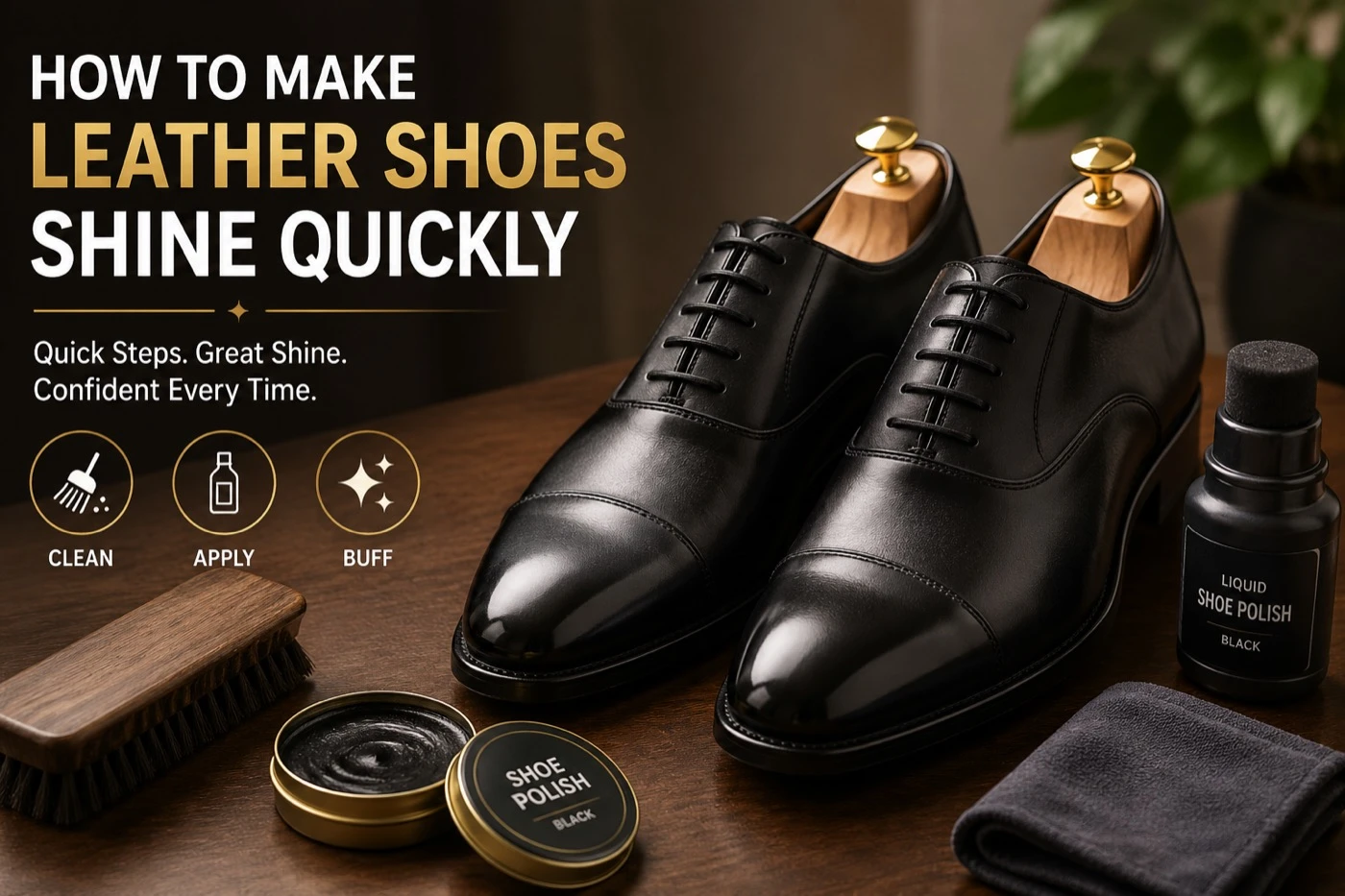
Different shoe-care formats provide different balances between convenience, appearance, color maintenance, and the amount of work required.
Liquid Shoe Polish
Liquid shoe polish is a practical option when speed and convenient application are priorities. Many formats use an integrated applicator that allows the user to distribute polish directly onto the shoe without using a separate brush.
This format can be particularly suitable for:
- daily office footwear;
- travel shoe-care kits;
- quick maintenance at home;
- hotel or hospitality amenities;
- retail shoe-care ranges;
- customers who prefer simple application.
The exact finish and application method depend on the formulation and product design.
Shoe Polish Cream
Shoe polish cream can be useful when the user wants more control over application and appearance. It normally requires a cloth, sponge, or brush for application and may involve additional buffing.
For customers who value a more traditional shoe-care process, cream polish can be a strong product category.
Wax or Solid Shoe Polish
Traditional solid or wax-based shoe polish is often associated with a more involved polishing routine. Application and buffing usually require more effort than an instant-shine format.
It can be suitable when customers are willing to spend additional time building and refining the appearance of the finish.
Instant Shine Sponge
An instant shine sponge is one of the simplest options for shoes that are already clean and only need a quick appearance refresh.
It can work well for travel, office drawers, hotels, convenience-oriented retail ranges, and emergency touch-ups. However, it should not automatically be considered a substitute for every type of regular leather-care product.
Which Shoe Polish Is Best for a Quick Shine?
The answer depends on what the user means by "quick."
| Product Type | Application Speed | Extra Tools | Typical Use |
|---|---|---|---|
| Liquid shoe polish | Fast | Often minimal | Routine quick polishing |
| Shoe polish cream | Moderate | Cloth, sponge, or brush | Controlled leather care |
| Solid/wax polish | More involved | Applicator and buffing tool | Traditional polishing |
| Instant shine sponge | Very fast | Usually none | Quick touch-ups |
For buyers developing a shoe-care range, these products should not necessarily be treated as direct replacements for one another. They can serve different price points, usage habits, retail channels, and consumer expectations.

Step 3: Apply a Thin, Even Layer
Using too much polish does not necessarily create more shine.
Excess product can make application slower and may contribute to an uneven appearance. Instead, start with a small amount and spread it evenly across the surface.
When using liquid shoe polish with an applicator, apply the product in controlled strokes rather than repeatedly saturating one area.
When using cream or solid polish, place a small amount on the applicator and distribute it gradually.
Pay particular attention to highly visible areas such as the toe and sides of the shoe.
Step 4: Buff the Leather When Required
Whether buffing is necessary depends on the shoe polish format and its instructions.
For products designed to be buffed, use a clean, soft cloth or suitable polishing brush after application. Quick, controlled buffing can help create a more even-looking surface and improve the final presentation.
Some convenience-oriented products are designed to simplify this stage. Buyers comparing formulations should therefore consider the complete user process, rather than judging a shoe polish only by its packaging format.

How to Make Leather Shoes Shine Without Spending Too Much Time
A quick routine becomes easier when the shoes are maintained regularly.
Polish Before the Shoes Become Extremely Dull
Frequent light maintenance is generally easier than trying to restore footwear after dirt and wear have accumulated significantly.
Keep the Right Product Accessible
For office or travel use, convenient packaging can be as important as the polishing formula itself.
A product that requires several separate accessories may be suitable for dedicated shoe-care users but less attractive to customers seeking an immediate touch-up.
Focus on Visible Areas
If time is extremely limited, remove dust across the entire shoe and pay particular attention to the toe and other highly visible areas during polishing.
This does not replace proper maintenance, but it can improve presentation quickly.
Avoid Over-Application
Applying a heavy layer and then trying to remove or distribute the excess wastes time. Thin application is usually more efficient.
Can You Make Dull Leather Shoes Look Shiny Again?
Often, yes-but the reason the leather looks dull matters.
If the problem is mainly surface dust or loss of surface shine, cleaning and polishing may noticeably improve the appearance.
If the leather has deeper scratches, severe color loss, cracking, peeling, or deterioration of the surface finish, shoe polish alone may not fully restore it.
This distinction is particularly important for product sellers. Marketing a shoe polish as a solution for every form of leather damage can create unrealistic customer expectations.
A clearer approach is to match the product to its intended function: routine polishing, color refreshing, surface shine, cleaning, conditioning, or another specific shoe-care need.
Black, Brown, or Neutral Polish: Which Should You Use?
For colored smooth leather, buyers and consumers should consider whether they want color maintenance as well as shine.
Black polish is generally selected for suitable black leather footwear, while brown polish should be matched carefully to compatible brown shades.
Neutral shoe polish can be useful when color versatility is more important, but it does not provide the same color-specific effect as a pigmented polish.
For distributors and private label brands, offering both colored and neutral options can help address different purchasing needs without positioning one format as universally better.
Common Mistakes When Trying to Shine Shoes Quickly
Speed should not mean skipping basic product-use principles.
Common mistakes include:
- polishing over dirt;
- using excessive amounts of product;
- applying a product unsuitable for the leather type;
- failing to follow drying or buffing instructions;
- assuming every leather material should be polished in the same way;
- using colored polish without considering the shoe color;
- expecting polish to repair serious leather damage.
Most conventional shoe polishes discussed here are intended primarily for appropriate smooth finished leather. Suede, nubuck, patent leather, synthetic materials, and specialty finishes may require different care products and methods.
What B2B Buyers Should Consider When Sourcing Quick-Shine Shoe Care Products
For importers, wholesalers, distributors, footwear brands, and private label buyers, "quick shine" is more than a consumer benefit. It can define how the product is positioned in the market.
Target Customer
Consider whether the product is intended for:
- office professionals;
- frequent travelers;
- everyday footwear users;
- traditional shoe-care customers;
- supermarkets and general retailers;
- footwear stores;
- hospitality or travel-related channels.
A convenience-focused customer may prefer a different format from someone who enjoys traditional shoe polishing.
Application System
Packaging and applicator design directly influence the user experience.
Buyers should evaluate how easily the product can be applied, how much control the applicator provides, and whether additional tools are required.
Finish Expectations
"Shine" can mean different things to different markets. Buyers should define the intended appearance and assess samples under realistic use conditions before placing a bulk order.
Color Range
Black, brown, neutral, and other market-relevant options may serve different footwear categories. The appropriate range should reflect the target market rather than simply maximizing the number of SKUs.
Private Label and Packaging
For OEM shoe polish and private label shoe polish projects, packaging should support the intended positioning.
Convenience-oriented products may benefit from packaging that communicates fast application clearly, while traditional shoe-care ranges may emphasize a different user experience.

How Should B2B Buyers Evaluate Samples?
A sample should be evaluated as the end customer would actually use it.
Rather than looking only at the product immediately after application, buyers can assess:
| Evaluation Point | What to Check |
|---|---|
| Application | Is the product easy to distribute? |
| Coverage | Does application appear reasonably even? |
| User process | Are the steps clear and practical? |
| Finish | Does the result match the intended positioning? |
| Applicator | Is it convenient and controllable? |
| Packaging | Is it suitable for the intended sales channel? |
| Color | Does the selected shade suit the target footwear? |
When comparing suppliers, use comparable shoes, application amounts, and evaluation conditions whenever possible. This makes sample comparisons more meaningful.
Frequently Asked Questions
How can I make leather shoes shine quickly?
Remove loose dust first, apply a thin and even layer of a suitable shoe polish, and buff if the product instructions require it. Liquid polish and instant-shine formats can be convenient when speed is the priority.
Can I shine leather shoes without a brush?
Yes. Some liquid polishes include integrated applicators, while instant-shine sponges are designed for convenient application. Other polish formats may work better with a cloth or brush.
Can I put shoe polish directly on dirty shoes?
It is better to remove surface dust and dirt first. Applying polish over contamination can result in an uneven finish.
Is liquid shoe polish faster than traditional shoe polish?
It can offer a faster application process, particularly when the packaging includes an integrated applicator. However, actual use steps vary by product formulation and instructions.
Can neutral shoe polish make black shoes shine?
A suitable neutral polish may improve surface appearance on some compatible footwear, but it does not provide the same color-refreshing effect as a black pigmented polish.
Can shoe polish fix faded leather?
Polish may improve the appearance of some faded smooth leather, especially when a compatible pigmented product is used. Significant color loss or surface damage may require more specialized restoration.
Can shoe polish be used on suede or nubuck?
Conventional smooth-leather shoe polish generally should not be assumed suitable for suede or nubuck. These materials typically require products specifically designed for their surface characteristics.
What should private label buyers test before ordering shoe polish?
Buyers should evaluate application, finish, color, user experience, applicator performance, packaging suitability, and whether the product meets the requirements of their target market.
Conclusion
Making leather shoes shine quickly is mainly about choosing an efficient routine: clean the surface, use the appropriate polish sparingly, apply it evenly, and buff when required.
For B2B buyers, the same principle translates into product selection. Liquid polish, cream polish, traditional solid polish, and instant-shine formats serve different consumer habits and sales channels. The best sourcing decision should therefore consider not only shine, but also application convenience, packaging, color options, target customers, and the expected user experience.
If you are sourcing shoe-care products for wholesale, distribution, retail, OEM/ODM, or private label programs, you can request information about available product formats, samples, specifications, packaging options, and customization possibilities.