

How to Make Cracked Leather Boots Look Smooth Again with Leather Repair Filler
Cracked leather boots do not always need to be replaced. With the right leather repair filler, many surface cracks, creases, scratches, and worn areas can be filled, smoothed, recolored, and finished for a cleaner appearance. This guide explains how leather repair filler works, when to use it, and how to restore cracked leather boots step by step.
For shoe care brands, distributors, and private label customers, a practical leather repair filler for boots can be used in retail repair kits, professional shoe care sets, leather recoloring kits, and household leather restoration products.
What Is Leather Repair Filler and How Does It Work?
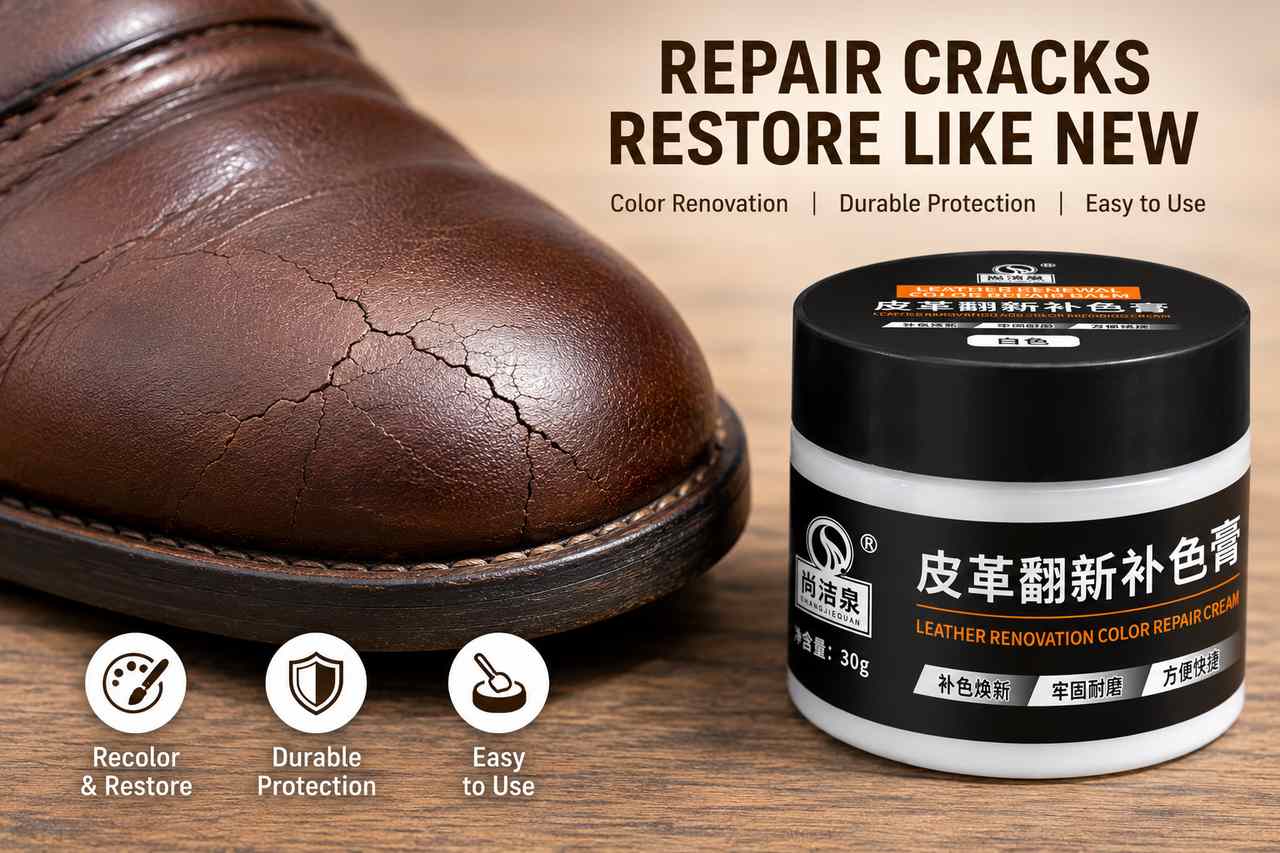
Leather repair filler is a flexible repair compound used to fill visible cracks, scratches, small holes, creases, and worn areas on leather surfaces. Unlike shoe polish, which mainly adds shine and color, leather crack filler helps rebuild an uneven surface before sanding, recoloring, and finishing.
On boots, the filler is usually applied to cracked toe caps, flex areas, scratches, and worn leather patches. After drying, the repaired area can be lightly sanded to create a smoother surface. Then leather color restorer, dye, or repair cream can be used to help the repair blend with the surrounding leather.
Leather is a natural material that can dry, crease, and crack over time. You can learn more about the material itself from this general leather reference.
When Should You Use Leather Repair Filler on Cracked Boots?
Use leather repair filler when the leather is still strong enough to hold the repair but the surface has visible cracks, scratches, or uneven worn areas. It is suitable for many common leather boot repair situations, including:
- Shallow to moderate cracks on boot toes
- Surface creases that need smoothing before recoloring
- Scratches on leather shoes, bags, sofas, or car seats
- Worn leather areas that look dry, faded, or rough
- Preparation before applying leather recoloring cream
If the leather is badly torn, rotten, peeling heavily, or losing structure, filler alone may not be enough. In that case, professional repair or panel replacement may be needed.
Step-by-Step Guide to Applying Leather Repair Filler
Before applying leather filler for boots, clean the surface carefully. Dust, oil, wax, and old polish can reduce adhesion, so preparation is important.
Step 1: Clean the boots
Remove dust, loose dirt, and old surface residue. You can also browse more shoe care and leather care articles for maintenance ideas.
Step 2: Dry the leather
Make sure the boots are completely dry before filling cracks. Avoid direct heat, because high heat can make leather drier and more brittle.
Step 3: Apply a thin layer of filler
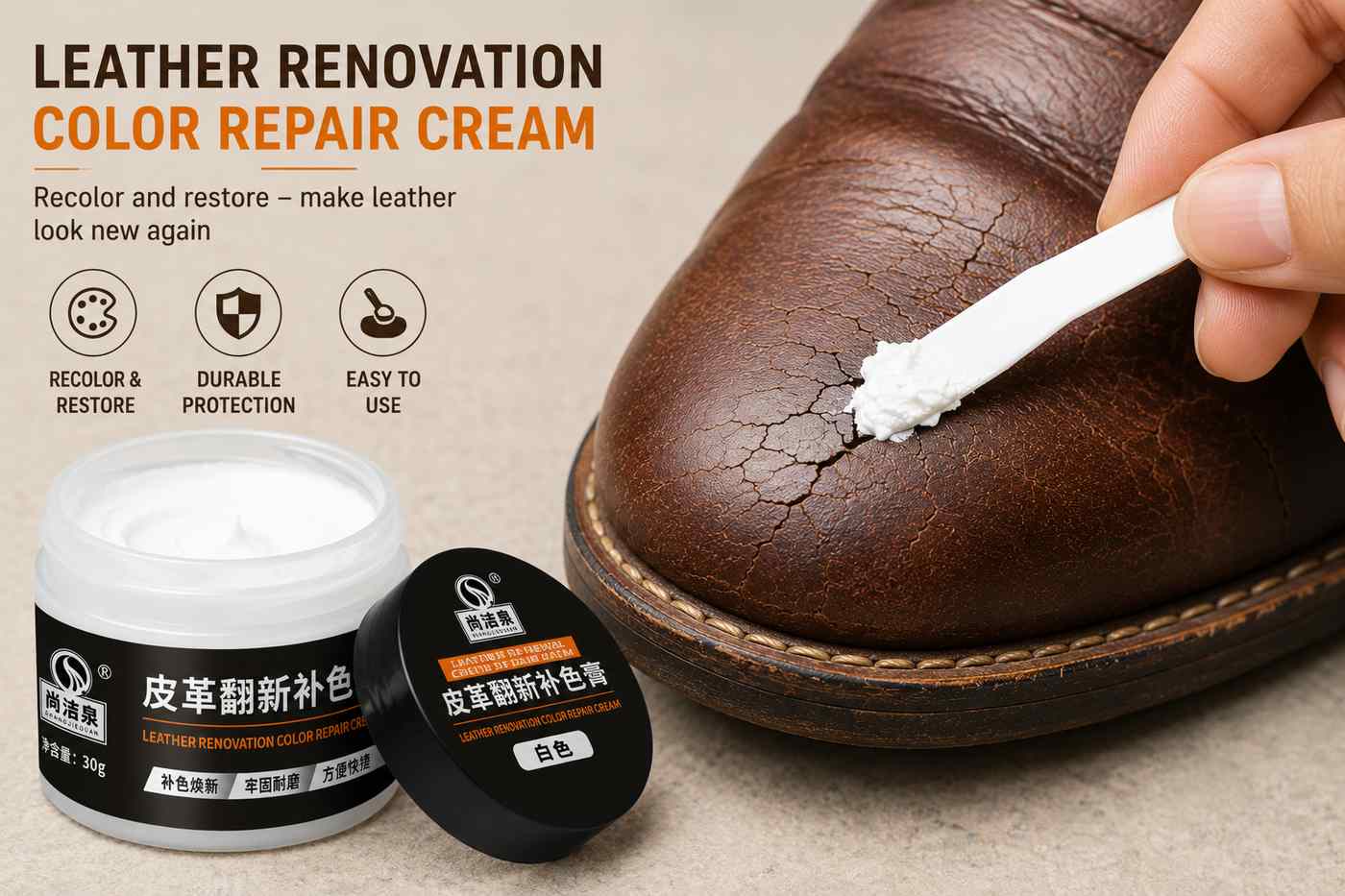
Use a small spatula, repair tool, or applicator to press leather repair compound into the cracks. Apply thin layers instead of one thick layer. Thin layers dry more evenly and are easier to smooth.
Step 4: Let the filler dry
Allow enough drying time according to the product instructions. Deep cracks may need repeated filling, drying, and sanding.
Step 5: Repeat if needed
For visible cracks, apply two or three thin coats until the surface looks more even.
How to Sand and Smooth the Repaired Leather Surface
After the leather shoe repair filler has dried, lightly sand the repaired area with fine sandpaper. The goal is to smooth the filler, not to damage the surrounding leather.
Use gentle pressure and check the surface often. If the repaired area still has low spots, add another thin layer of leather repair filler, let it dry, and sand again. A smoother surface will help the recoloring step look more natural.
This stage is especially important if your goal is to smooth cracked leather on visible toe areas, dress boots, or customer-facing repair demonstrations.
Recoloring and Finishing After Using Leather Repair Filler
Once the repaired surface is smooth, apply leather dye, color repair cream, or leather color restorer to help the filled area blend with the original boot color. For a related leather care product example, see Mink Oil For Leather Boots.
After recoloring, apply a suitable leather finish or protective cream. This can improve the final appearance and help protect the repaired surface from daily wear.
For product selection, it also helps to understand the difference between conditioner and filler. Conditioner helps maintain flexibility, while filler physically repairs cracks and uneven areas.
Tips to Prevent Leather Boots from Cracking Again
Repair can improve the appearance of damaged leather, but regular care is what helps prevent new cracks. To keep leather boots in better condition:
- Clean boots regularly after use
- Condition leather every few months
- Avoid direct sunlight and strong heat
- Use shoe trees when possible
- Store boots in a dry, ventilated place
- Recolor or refinish worn areas before they become deep cracks
Recommended Product: Leather Repair Filler
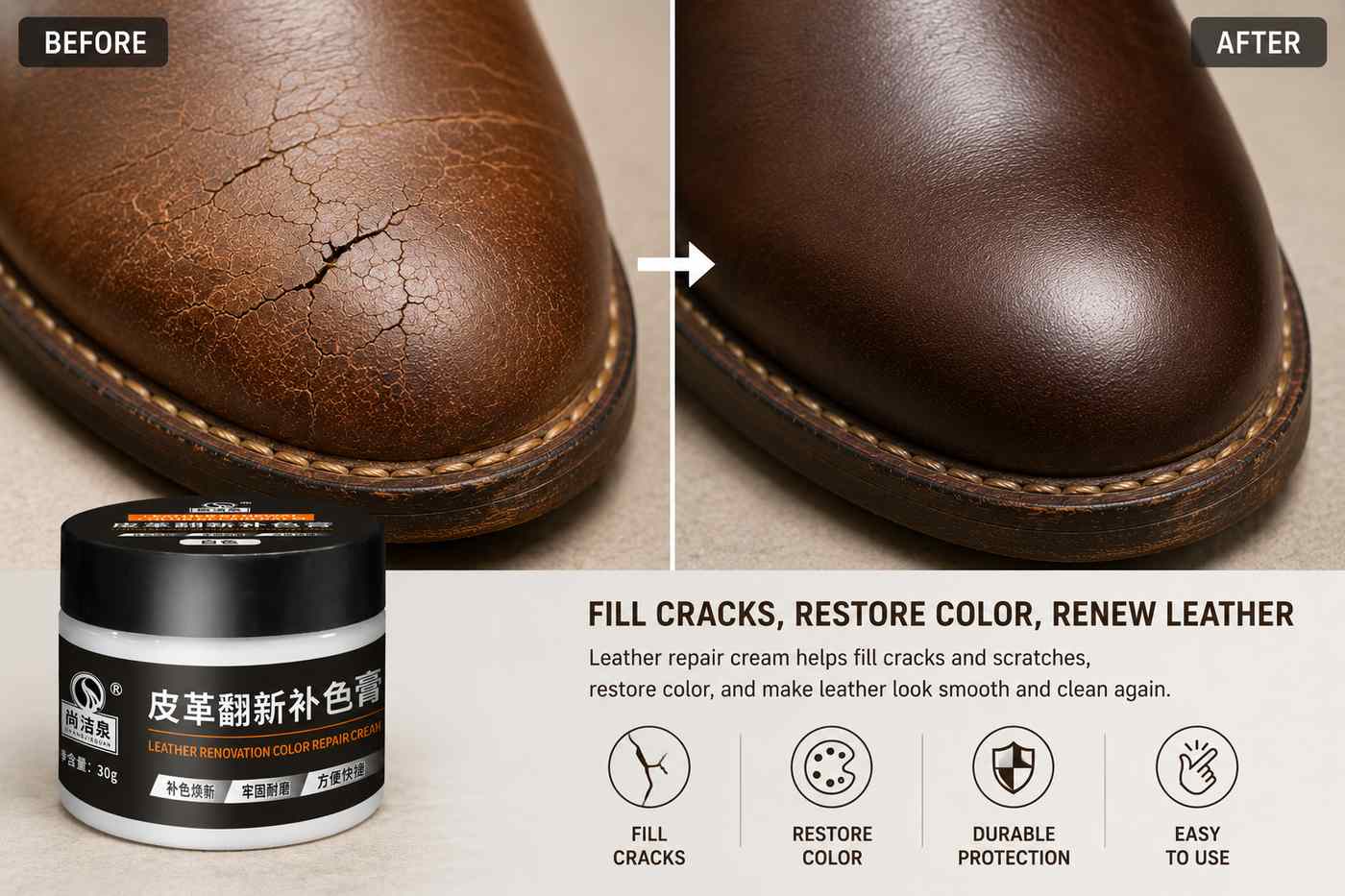
Our leather repair filler is designed for cracked boots, leather shoes, scratched bags, worn sofas, automotive leather seats, and leather recoloring preparation. It helps fill surface cracks and scratches, smooth worn leather areas, and prepare leather for recoloring.
Ideal applications:
- Cracked leather boots
- Leather shoes with surface creases
- Scratched leather bags
- Worn leather sofas
- Automotive leather seats
- Shoe care and leather restoration kits
Main functions:
- Fills surface cracks and scratches
- Smooths worn leather areas
- Prepares leather for recoloring
- Improves the appearance of damaged leather
- Suitable for OEM and ODM leather care products
OEM and ODM Leather Repair Filler Solutions
Looking for a reliable leather repair filler supplier for your shoe care or leather care product line? We support OEM and ODM customization for brands, wholesalers, distributors, and private label customers.
Customization options include formula adjustment, color matching, packaging design, label design, repair kit combination, and bulk production support.
Get OEM Quote | Contact Supplier | View Leather Care Products
FAQ
What is leather repair filler used for?
Leather repair filler is used to fill cracks, scratches, small holes, creases, and worn areas on leather surfaces. For leather boots, it is mainly used to smooth cracked or damaged areas before recoloring and finishing.
Can leather repair filler fix cracked leather boots?
Yes. Leather repair filler can help fix surface cracks on cracked leather boots if the leather is still strong and flexible. It works best on shallow to moderate cracks, worn toe areas, creases, and small surface damage.
Is leather repair filler the same as shoe polish?
No. Shoe polish mainly adds color, shine, and light surface protection. Leather repair filler physically fills cracks and uneven areas. In many repair jobs, filler is applied first, then the boots are sanded, recolored, and finished with polish or leather cream.
Do I need to clean leather boots before using repair filler?
Yes. The leather surface should be clean, dry, and free from dust, oil, old wax, and loose dirt before applying leather repair filler. Proper cleaning helps the filler bond better to the cracked leather surface.
How many layers of leather repair filler should I apply?
It is better to apply two or three thin layers instead of one thick layer. Thin layers dry more evenly, bond better, and are easier to sand smooth. Deep cracks may need repeated filling, drying, and sanding.
Can I recolor boots after applying leather repair filler?
Yes. After the filler dries and the repaired area is sanded smooth, you can apply leather dye, leather color restorer, or leather repair paint. Recoloring helps the repaired area blend with the original boot color.
Will the repaired area be completely invisible?
Not always. Leather repair filler can greatly improve the look of cracked boots, but very deep cracks or old leather damage may still be slightly visible under close inspection. Careful sanding, color matching, and finishing will make the repair look cleaner and more natural.
How can I prevent leather boots from cracking again?
Clean the boots regularly, condition the leather every few months, avoid direct heat, use shoe trees when possible, and keep the leather away from long-term dryness. Regular care helps maintain flexibility and reduces the chance of new cracks.